Gap and go strategy: how it works and where it fails
By Scalpel Team. , updated . 7 min read.
In short
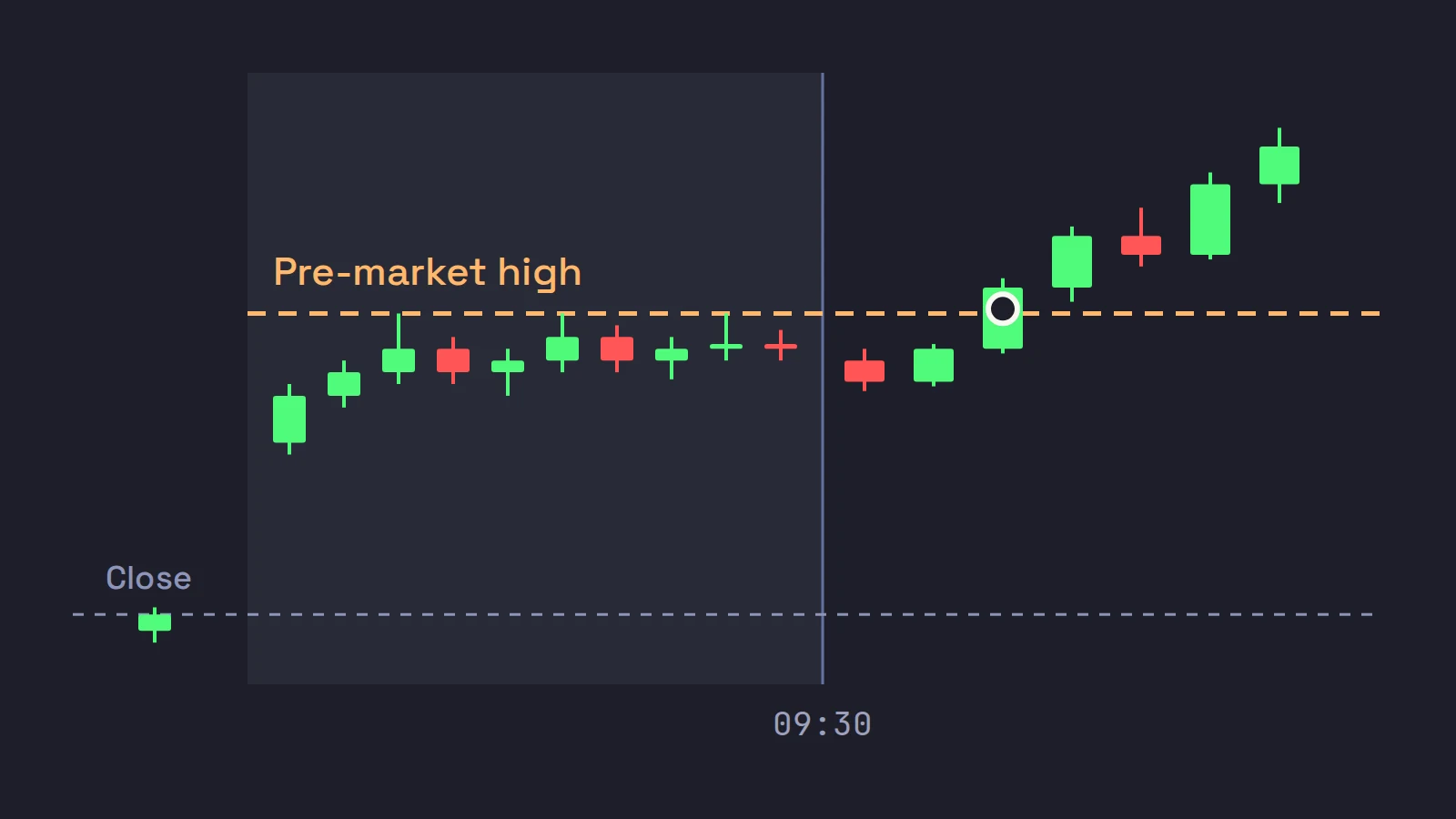
Gap and go is a momentum entry on a stock that gapped up overnight on news: you buy when it breaks above its pre-market high at or after the 09:30 ET open, with a stop under the last pullback low. It works best on a fresh catalyst, heavy pre-market volume and a stock that held its gains near the high before the open. It fails often: the pre-market high can be one thin print, the open can flush the gap, an offering can cap it, and a halt can trap you.
The gap and go strategy is the first trade of the day for many small-cap momentum traders, and it is the setup most likely to look obvious in hindsight. Everybody can see the same pre-market high. This guide covers what a gap and go is, the checklist before the open, the entry and stop with a worked example, the ways it fails, and what research on gaps and opening breakouts does and does not say.
Scalpel is independent and not affiliated with or endorsed by Interactive Brokers.
What is a gap and go?
A gap and go has three parts:
- The gap. The stock closed yesterday at one price and trades well above it in the pre-market, usually on news.
- The hold. Through the pre-market it keeps most of its gain, building a range under a clear pre-market high, instead of fading back toward yesterday's close.
- The go. At or soon after the 09:30 ET open, regular-hours volume arrives and the stock trades through the pre-market high. That break is the entry.
The idea is that the pre-market high is where early buyers took profits and sellers waited. If the open brings enough new buyers to clear them, there is often little supply above until the next round number. If it does not, the stock usually fails right there, which is what makes the level useful: you know quickly whether you are wrong.
The gap and go checklist
Before 09:30, a gap and go candidate should pass every line. Each one cuts a failure mode.
| Check | Typical bar | Why |
|---|---|---|
| Gap | Up 10% or more from yesterday's close | A real move, not noise |
| Catalyst | Fresh, real news | A reason for new buyers at the open (news catalysts) |
| Pre-market volume | Well above a normal day's pace | The interest is real (relative volume) |
| The hold | Trading in the upper part of its pre-market range by 09:15 | Buyers are still in control |
| The level | A pre-market high tested more than once, not a single print | A level made of one print breaks and fails easily |
| Supply | No fresh shelf, offering or warrants overhead | The company is not selling into you |
How to find pre-market gappers is the morning routine that produces this list.
Gap and go entry and stop: a worked example
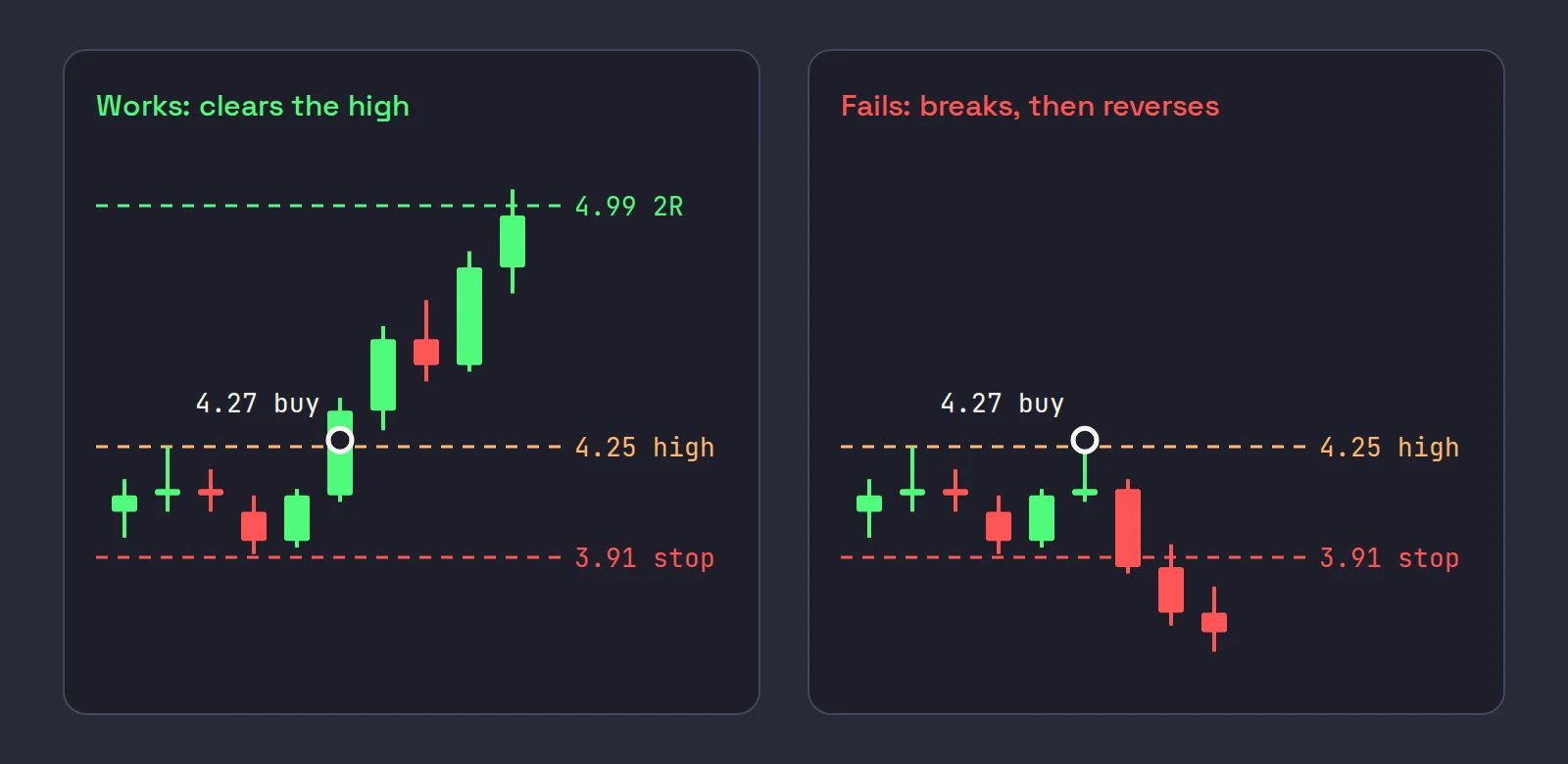
A fictional stock. ABCD closed at $2.97 and announced a supply contract at 07:02 ET. By 09:15 it has traded 2.4 million shares in the pre-market, has tested $4.25 three times, and sits at $4.10.
- 09:30. The opening print is $4.05. In the first two minutes it dips to $3.92, then turns.
- 09:34. It trades $4.26, through the pre-market high. You buy with a limit at the ask plus 2 cents: filled at $4.27.
- Stop. Under the dip low, at $3.91. That is a risk of $0.36 per share.
- Size. With $50 of risk, 50 / 0.36 = 138 shares, about $590 of stock.
- Target. 2R is $0.72 above the entry, $4.99. Many traders sell half at $5.00, a whole dollar where sellers often sit, and move the stop to break-even.
Two other entries are common, and both are the same idea with a different level:
- The opening range breakout. Wait for the first 1 or 5 minutes after the open, then buy a break of that range's high. You trade a level made in regular-hours volume instead of a thin pre-market print, and give up some of the move.
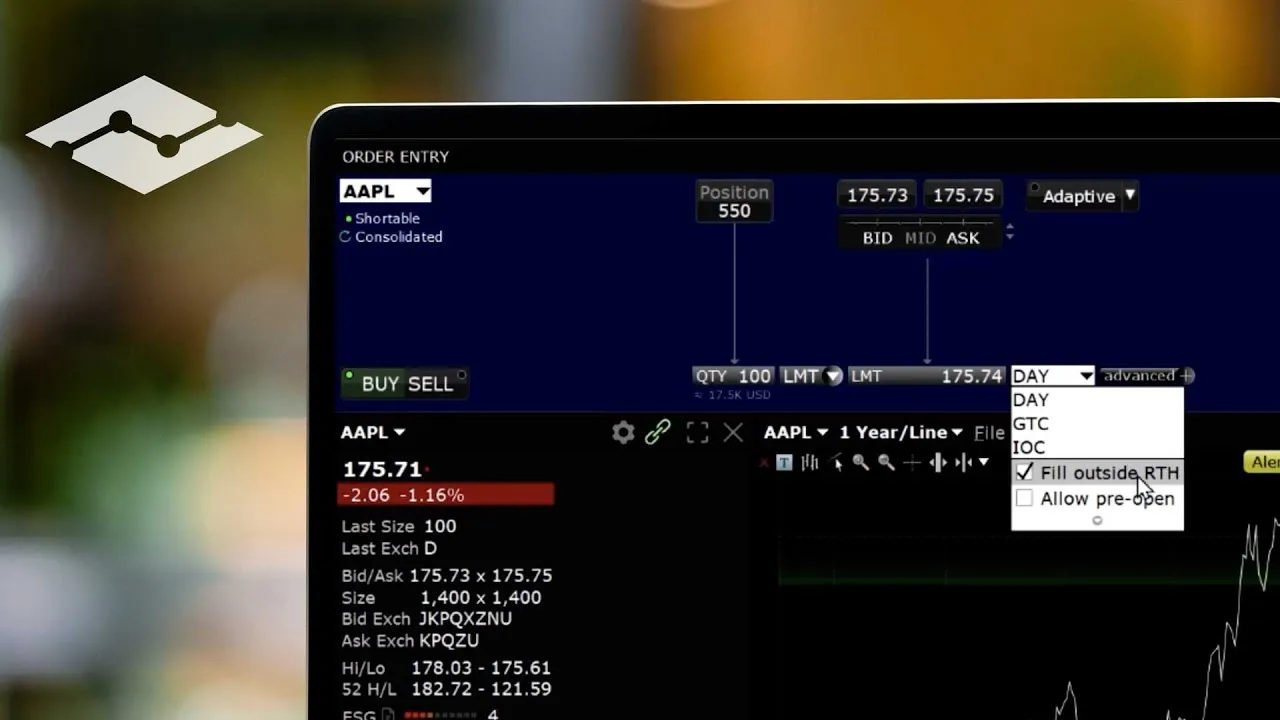
- The pre-market break. Buy the break of the pre-market high before 09:30. Earlier and cheaper when it works, and on the thinnest book of the day when it does not. On IBKR the order must be a limit order allowed to fill outside regular trading hours, and a broker stop cannot protect you before the open.
This Interactive Brokers lesson shows how to let a TWS order fill outside regular trading hours, by default or per order, which a pre-market entry needs.
Where the stop goes is the other half of the trade. Under the pullback low is the most common; under VWAP or the opening range low are alternatives. How stops work covers the mechanics, and why your stop did not trigger in the pre-market covers the trap with IBKR stop orders outside regular hours.
Where gap and go fails
Gap and go fails a lot, and the failures have names.
| Failure | What it looks like | The tell |
|---|---|---|
| Opening flush | The stock opens and sells straight down toward yesterday's close | Pre-market buyers sell into the first regular-hours liquidity |
| Break and fail | It trades a few cents over the pre-market high, then reverses below it | No size on the tape at the break; a seller refills the ask |
| Offering cap | It runs into a price and stalls there, again and again | A fresh 424B or ATM: the company is selling there |
| Halt | It spikes, halts, and reopens lower | A move outside its Limit Up-Limit Down band |
| Too late | You buy the third push, not the first | The stock is far above VWAP and the volume is fading |
Halts deserve their own line. Under the Limit Up-Limit Down plan, a typical small cap above $3.00 has a 10% price band during regular hours, and one from $0.75 to $3.00 has a 20% band. A stock that cannot trade back inside its band is paused for five minutes, which can be extended for another five. A gap and go that spikes into a halt can reopen anywhere. LULD trading halts explains what happens to your orders.
Plan for the opening flush first. When you are wrong, the honest response is to take the stop and wait for a different setup. Some flushed stocks set up again later as a high of day breakout or after a first pullback, but that is a new trade with new risk, not a rescue of the first one.
Do gaps fill? What the research says
"Gaps always fill" is a market proverb, and the best-known long study does not support it. Alex Plastun, Xolani Sibande, Rangan Gupta and Mark Wohar studied price gaps on the Dow, S&P 500 and Nasdaq from 1928 to 2018 and found that on a gap day prices tend to move in the direction of the gap, that the momentum effect was temporary, and that their results were contrary to the myth that gaps tend to get filled (North American Journal of Economics and Finance, 2020). That is index data, not low-float small caps. We could not find a public, verifiable study of gap fills in small-cap gappers, so we will not give you a number.
On opening breakouts in single stocks, a 2024 working paper by Carlo Zarattini, Andrea Barbon and Andrew Aziz tested a plain five-minute opening range breakout on US stocks priced above $5 from 2016 to 2023. With $25,000 to start and a $0.0035 per share commission, the portfolio gained about 30% over the eight years, against nearly 200% for buying and holding the S&P 500 (SSRN 4729284). Limited to the stocks with the highest relative volume, the same rule did far better in their backtest. Read that with care: it is a backtest that models commissions but not slippage, it excludes most small caps, and Aziz runs a trading education business. The lesson we take from it is narrow. A breakout entry on its own earned little; what mattered was how selective the rule was about the stock.
When gap and go is the wrong trade
- No news, or old news. A gap without a fresh reason fades more often.
- A thin, wide book at 09:30. If the spread is 15 cents on a $4 stock, your entry and your stop both cost more than the plan says.
- A gap into heavy resistance. Yesterday's high, a recent offering price or a whole dollar just above the pre-market high can stop the move before it starts.
- You are already down for the day. The first trade of the morning is the worst place for revenge.
Gap and go is one of three common momentum entries; momentum day trading puts it next to the others and the risk rules that go with them.
Where Scalpel fits
Scalpel's Setups scan watches every stock on the IBKR scanner's list for this pattern. It tracks each stock's pre-market high, read from IBKR's 1-minute history when the stock joins the list and kept current from live trades. After 09:30, the first trade back above that high puts a green G chip on the row and calls out "Gap and go". It fires once per stock per day, and it will not call a late cross one if the stock had already crossed before it joined the list (scan types).
When you take the trade, a Risk (Cents) buy key sizes it from your stop distance, and every entry arms an app-monitored stop and a take-profit at 2R by default. Those stops are watched by Scalpel, not resting at IBKR: they only work while Scalpel is running with a live feed, and no fill is guaranteed, especially on a halt reopen. Our scanner video shows the scan desk through the open:
The momentum method covers the other setup chips, pre-market scanning covers what runs before the open, and the pre-market routine is the morning with times. A G chip says the pattern happened, not that it will work.
Trading carries a significant risk of loss. Nothing here is financial advice. LULD rules and research checked on October 22, 2026.
Questions
- What is the gap and go strategy?
- Buying a stock that gapped up overnight on news when it breaks above its pre-market high at or after the 09:30 ET open, with a stop under the most recent pullback low. It relies on new regular-hours buyers clearing the sellers at the pre-market high.
- Where do you put the stop on a gap and go?
- Most traders put it just under the last pullback low before the break, or under VWAP or the opening range low. Size the position from that distance so the dollar loss stays the same on every trade.
- Does gap and go work?
- Sometimes, and it fails often. Opening flushes, failed breaks, offerings and halts are common. A backtest of plain opening range breakouts found them well behind simply holding the index, with results depending heavily on which stocks were traded.
- Do gaps always fill?
- No. A long study of US index gaps from 1928 to 2018 found prices tended to move in the gap's direction on the gap day and found no support for the idea that gaps tend to get filled. Small caps were not studied.
- Can you trade a gap and go before 09:30?
- Some traders buy the pre-market high break before the open. The book is much thinner, spreads are wider, orders must be limit orders allowed outside regular hours, and a broker stop order cannot protect the position until the open.
Related guides
Guide 14.6The momentum method Scalpel is built aroundThe small-cap momentum style Ross Cameron teaches, from stock selection to gap and go and micro pullbacks, mapped to Scalpel's scanner, intel and stops.Guide 14.2A pre-market routine with ScalpelA step-by-step routine from 04:00 ET to the open: connect, scan for gappers, check dilution and borrow, load your desks and set your risk before the bell.Guide 5.1How Scalpel's stops workWhy Scalpel holds your stops in the app, not on the book: pre-market rules, the working stop, catastrophe net and take-profit, and what if Scalpel closes.
Keep reading
- Momentum day trading: how small-cap momentum worksMomentum day trading explained: what makes small caps move, the shape of the day, entries, exits and risk, and what the research says about the odds.
- Momentum trading on Interactive Brokers: scanner setup for gappersInteractive Brokers momentum trading starts with the scanner: TWS settings for pre-market gappers, which scans to run, and how to live without a float filter.
- Small-cap momentum trading on Interactive Brokers: what you needSmall-cap momentum trading on Interactive Brokers: what the Warrior Trading review says, and how to get scanning, hotkeys, fixed risk and pre-market stops.
Practice in SIM, against the live book.A lifetime license, every update included, with a 7-day refund guarantee.Ask in DiscordGet Scalpel